Google AI Mode vs AI Overviews: How They Differ for Visibility
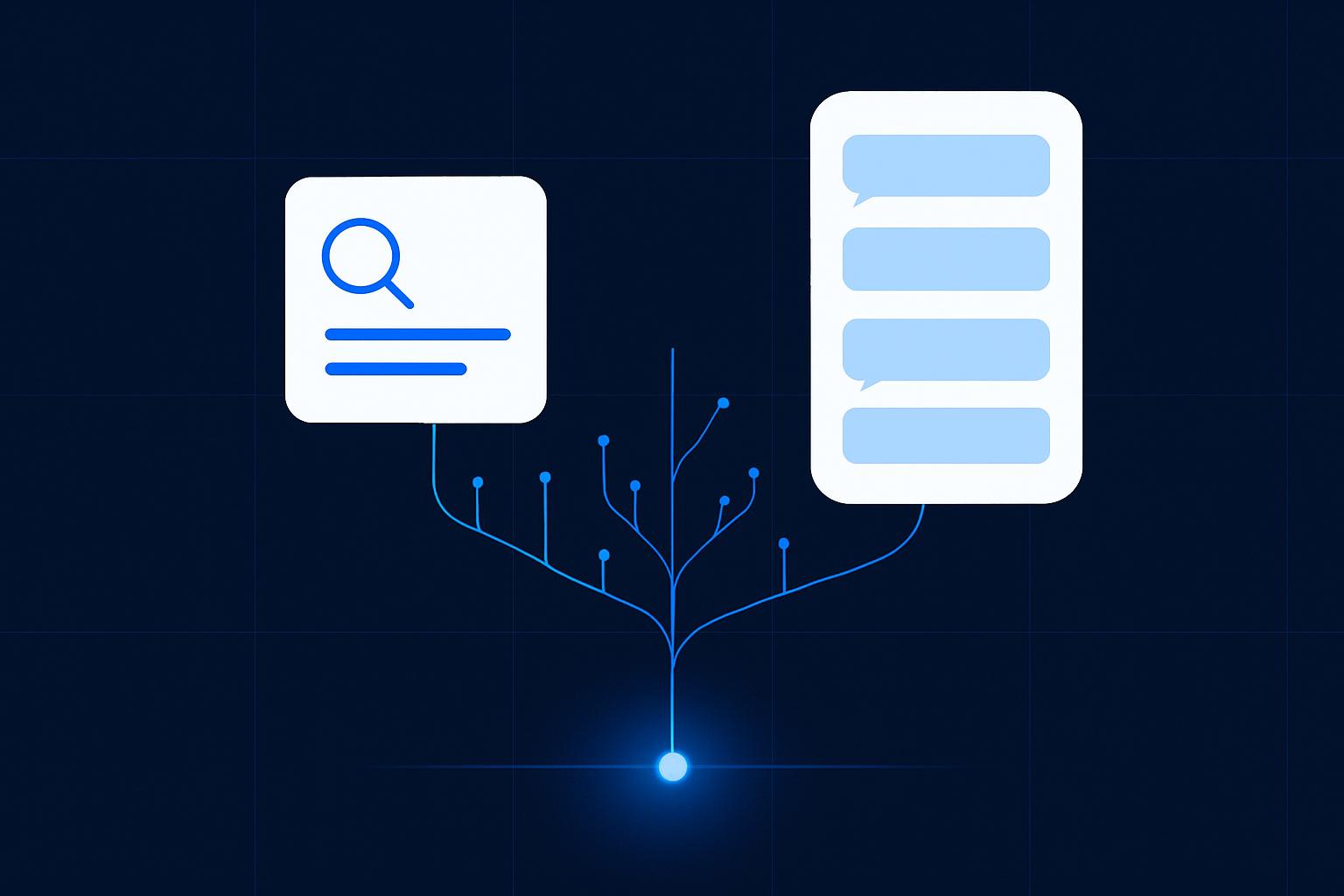
Google runs two AI search products that look similar and behave almost nothing alike. AI Overviews is the summary box that appears above the blue links whether you asked for it or not. AI Mode is the dedicated conversational tab you opt into for deeper, multi-turn research. They share a model family and a retrieval technique, but they serve different intents, draw from different source pools, and — this is the part most founders miss — cite almost entirely different pages for the same question.
That last point is the whole story. When Ahrefs compared the two surfaces across 540,000 query pairs, AI Mode and AI Overviews cited the same URLs only 13.7% of the time, and even the top-three citation overlap reached just 16.3% — meaning roughly 87% of citations are completely different between the two systems. Winning one does not win you the other. Below is how they actually differ, and where that leaves your GEO effort in 2026.
AI Overviews and AI Mode are two products with one shared retrieval trick
Both surfaces run on Gemini and both use query fan-out — Google breaks one prompt into multiple sub-queries, retrieves for each, and synthesizes the results into a written answer with citations. That mechanic is now the core of how both products choose what to cite, and I've covered its internals in How Google AI Overviews Choose Citations: Query Fan-Out, so I won't re-explain it here.
The products diverge on almost everything else. AI Overviews launched broadly in the United States in May 2024 and are woven into the standard results page. AI Mode launched at Google I/O in May 2025 as a distinct, opt-in conversational surface where users ask questions in natural language, receive multi-paragraph synthesized answers, and follow up across multiple turns inside a single session.
The scale is not close to symmetrical either. At I/O 2026, AI Mode crossed 1 billion monthly active users in 12 months while AI Overviews reached 2.5 billion. AI Overviews is the mass surface; AI Mode is the deep-research surface — and the audience using each behaves differently.
| AI Overviews | AI Mode | |
|---|---|---|
| What it is | Summary box above the blue links | Dedicated conversational search tab |
| User intent | Push — Google decides you need a summary | Pull — you opt in for deeper research |
| Launched | May 2024 (US) | May 2025 (I/O) |
| Scale (I/O 2026) | ~2.5B monthly users | ~1B monthly users |
| Answer length | 1–3 short paragraphs | ~4x longer, multi-paragraph |
| Entities named | Baseline | ~2.5x more people and brands |
| Source lean | Video, community, practical | Academic, editorial, deeper |
| Best GEO focus | Concise citable passages, broad reach | Sub-query coverage across a cluster |
AI Mode names more brands — and that's the opportunity
The single most important product difference for a SaaS founder is response length, because length changes how many brands get named. AI Mode's longer responses may include additional entities and competitors compared to the shorter AI Overview format. Ahrefs quantified this: AI Mode responses include 2.5x more people and brand entities than AI Overviews.
More slots means more chances to be mentioned — but also more competitors sharing the answer. The flip side is encouraging for anyone already earning AIO visibility: if your brand gets mentioned in AI Overviews, there's a 61% chance it'll also appear in AI Mode's longer response. An AIO mention is a leading indicator, not a guarantee. It gets you 6-in-10 odds on the deeper surface, not certainty.
And plenty of answers name no one at all. Ahrefs found 32.8% of responses had no person or brand mentioned. Roughly a third of the time, there is no brand slot to win — a reason to prioritize the queries where a mention is actually on the table, which is where citation share as a metric earns its keep.
They agree on the answer but disagree on the source
The strangest finding in the Ahrefs data is that the two surfaces reach the same conclusion while citing different pages. Despite low citation overlap, the two systems reach semantically similar conclusions 86% of the time — they agree on what to say while fundamentally disagreeing on where they found it. As Ahrefs put it, 9 out of 10 times AI Mode and AI Overview agreed on what to say; they just said it differently and cited different sources.
For visibility, the source half is what you can influence, and the source pools genuinely differ. Ahrefs found that Wikipedia appears in 28.9% of AI Mode citations compared to 18.1% in AI Overviews. More broadly, AI Mode favors deeper, more thorough sourcing — more academic and editorial sources, and more entities and brands — while AI Overviews favor concise, practical sourcing and lean on video and community content. That community lean is why Reddit remains disproportionately important on the AIO side; I break down the mechanics in Why Reddit Dominates AI Search Citations.
There's a coverage difference too. For 3% of responses AI Mode doesn't cite any sources, while AI Overviews cite no sources 11% of the time. AI Mode is more consistently a citation surface — another reason it rewards content built to answer sub-queries directly.
Which queries trigger each surface
AI Overviews appear automatically. They're AI-generated summary boxes above the normal results for some queries whether the user asked for a summary or not, answering in a few sentences with a handful of cited links before the ten blue links continue below — the user did not opt in. Historically, around 18% of searches triggered one in early 2025 per Pew Research, concentrated on informational queries.
AI Mode is a destination. Session duration on AI Mode is roughly three times longer than traditional Google Search, and its zero-click rate is 93%. The queries that land there are longer and more considered — roughly 3x longer than classic search. Fan-out also scales with complexity: simple factual lookups trigger little expansion, while a single AI Mode query can trigger up to sixteen parallel sub-searches, with 59% of prompts triggering between five and eleven sub-queries simultaneously.
This maps onto a split I've written about on the Gemini side: informational "what is X" queries and "best X for Y" recommendation queries pull from different source pools and reward different content. The same logic applies across these two surfaces — a quick factual AIO answer and a multi-turn AI Mode research session are different optimization problems. See Gemini's Split Brain: Informational vs. Recommendation Queries for how to structure content for each intent.
Top-10 rankings barely predict AI citations on either surface
Here is the assumption to retire: that ranking well means getting cited. The link between organic position and AI citation has collapsed. Ahrefs' large study of 863,000 keywords found only 38% of pages cited in Google AI Overviews also rank in the top 10 for the same query — down sharply from 76% seven months earlier. A separate BrightEdge analysis puts the top-10 overlap even lower, at approximately 17%, depending on methodology.
The cause is fan-out. Google breaks an initial query into multiple related sub-queries, then cites pages that perform well across that wider cluster. Which changes who can win: a brand-new site with truly comprehensive topical content can outperform an aged domain if it satisfies more sub-queries. The practical implication is blunt — the page that ranks first for the original phrase gets one shot, while the vendor with a specific, citable passage on six of the eight sub-queries gets six.
This is why I tell SaaS founders to stop optimizing single pages for single keywords and start building clusters that answer the sub-questions fan-out generates. It's the core of How to Make Your Content Citable by AI and the 90-Day GEO Roadmap.
The 2026 merge changes the interface, not the optimization work
In May 2026, Google collapsed the visible boundary between the two. At I/O 2026 it announced it was bringing AI Overviews and AI Mode into one seamless AI Search experience, so you flow from your question, to a results page with an AI Overview, to a follow-up in AI Mode, all with links to learn more. The new seamless experience is live across desktop and mobile, worldwide. Gemini 3.5 Flash became the default model for the merged experience globally.
Don't read "merge" as "same thing now." The surfaces still run different models and techniques and still cite different sources. What the merge does is unify the citation surface from the buyer's point of view: brands are either extracted and cited across the entire AI search experience or absent from it — and with AI Mode at 1 billion monthly users and AI Overviews reaching 2.5 billion, content not structured for AI extraction is invisible to the majority of Google's search audience.
Google also added levers publishers can actually use. The I/O announcement added a carousel highlighting preferred sources on developing topics, promised a similar carousel of perspectives from forums and social media, and expanded the "Highly Cited" badge to more web article links.
Where founders should actually focus
Given all of the above, here's how I'd allocate effort:
- Build sub-query coverage, not keyword rankings. Both surfaces cite pages that answer the sub-questions fan-out generates. Map the cluster; cover it. AI Mode's aggressive expansion rewards breadth most.
- Treat an AIO mention as a leading indicator for AI Mode. With a 61% carry-over, earning AIO citations is the cheapest path onto the deeper surface. Track both, but start with AIO.
- Match content type to surface. AIO leans practical, community, and video; AI Mode leans editorial, academic, and entity-rich. If you sell to a buying committee doing multi-turn research, invest in the deeper, authoritative content AI Mode prefers.
- Structure for extraction. Self-contained passages, clean content chunking, and question-shaped headings get lifted on both surfaces. This is the shared denominator.
- Measure by surface where you can. The two surfaces diverge enough that a single "AI visibility" number hides the real picture. Track citation share per surface — the framework is in Tracking AI Overview Citation Share by Keyword.
The short version: these are one experience for the user and two problems for you. Optimize for extraction across a topical cluster, verify your presence on each surface separately, and use your cheaper AIO wins as the on-ramp to the higher-value AI Mode surface. If you want a baseline before you start, run a free AI visibility report or work with me on the cluster strategy directly.
Frequently asked questions
What is the main difference between Google AI Mode and AI Overviews?
AI Overviews is the AI summary box that appears automatically above standard search results for some queries. AI Mode is a separate, opt-in conversational tab for deeper, multi-turn research. They share Gemini and query fan-out but serve different intents, produce different answer lengths, and cite mostly different sources — Ahrefs found only 13.7% citation overlap between them.
If I appear in AI Overviews, will I also appear in AI Mode?
Not automatically. Ahrefs found that if your brand is mentioned in AI Overviews, there's about a 61% chance it also appears in AI Mode's longer response. So an AIO mention is a strong leading indicator but not a guarantee — you still need to verify presence on each surface separately.
Does ranking in Google's top 10 get me cited in AI answers?
Increasingly, no. Ahrefs found only 38% of AI Overview citations came from top-10 pages in early 2026, down from 76% seven months earlier, and BrightEdge puts the overlap near 17%. Query fan-out cites pages that answer sub-queries across a topic cluster, not just the page that ranks for the exact phrase.
Did the 2026 merge make AI Mode and AI Overviews the same thing?
No. At I/O 2026 Google merged them into one seamless flow so users move from an AI Overview into an AI Mode conversation without switching interfaces. But the two surfaces still use different models and techniques and cite different sources. The merge unifies the user experience and the citation surface — you're either extracted across it or absent from it — not the underlying retrieval.
Which surface should SaaS founders prioritize for GEO?
Start with AI Overviews because it reaches ~2.5 billion users and an AIO mention carries about 61% odds of also appearing in AI Mode. Then invest in the deeper, entity-rich, editorial content AI Mode favors — especially if your buyers do multi-turn research. The shared foundation for both is building extractable, self-contained passages across a topical cluster that answers fan-out sub-queries.
References
- Ahrefs — AI Overviews vs AI Mode: How Do They Compare?
- Search Engine Journal — Google AI Mode & AI Overviews Cite Different URLs, Per Ahrefs Report
- Google — Google Search's I/O 2026 updates: AI agents and more
- Google — 100 things we announced at Google I/O 2026
- ALM Corp — Google AI Overview Citations From Top-10 Pages Dropped From 76% to 38%
- Pepper Content — How Google AI Mode Works: The Shift from Search to Conversation
- Aleyda Solis — Google AI Mode's Query Fan-Out Technique: What Is It & How Does It Mean for SEO?

Cory Maki is an AI search strategist based in Taichung, Taiwan, specializing in GEO, AI reputation management, and AI branding for SaaS founders. Author of Reddit, AI Overviews & GEO and creator of the ARC Method. Read more →