How Microsoft Copilot Picks Its Sources vs ChatGPT
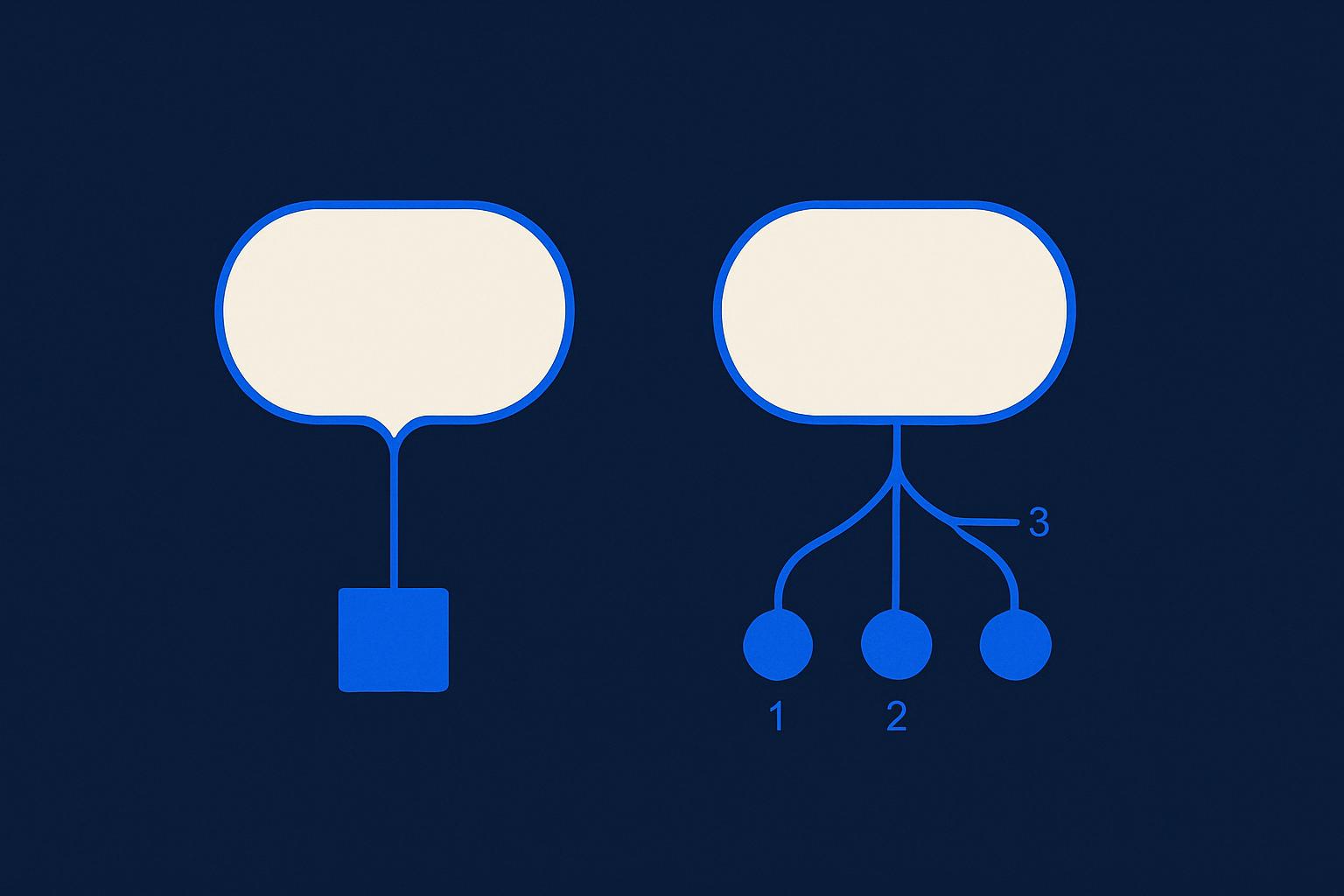
Microsoft Copilot and ChatGPT share the same brain and, increasingly, the same retrieval plumbing — and still cite different sources for the same question. That is the part founders miss. The consumer Microsoft Copilot and ChatGPT both use OpenAI's GPT models, so on a quick question you would struggle to tell them apart. The difference lives one layer down, in how each system decides when to search, which index it queries, how it rewrites your question before retrieving, and what it rewards when it picks the handful of pages it will name.
This article follows the same four-part frame I used for how Claude chooses and cites its sources and how Perplexity picks its sources — training data, web search strategy, crawler behavior, source preference — so you can read Copilot as a peer, not in isolation. If you want the category-level picture first, start with the GEO guide. Everything below is specific to Copilot's mechanics and where they diverge from ChatGPT's.
Copilot grounds nearly every web answer in Bing's index; ChatGPT searches selectively
The single most important fact about Copilot is where its answers start. Copilot's answers begin somewhere specific, and it is not the language model most people picture — they begin in Bing's search index. When you ask Copilot a web question, it queries Bing, retrieves candidate pages, and then writes a synthesized answer with numbered citations drawn from what it found. That order matters more than any other single fact about how Microsoft Copilot chooses sources, because it means the citation contest is decided first in Bing and only finished in the model.
Copilot grounds by default. ChatGPT does not. ChatGPT also searches the web, on by default, but it decides per query whether to look something up rather than grounding every answer. ChatGPT will choose to search the web based on what you ask, or you can manually choose to search by clicking the web search icon. That is a real behavioral gap: ask both a factual question and Copilot almost always reaches for the live index, while ChatGPT may answer from parametric memory — its training data — and never cite anyone at all.
The practical consequence: Copilot is a citation surface on nearly every web-style query, which makes it a more consistent target for GEO than ChatGPT's on-again, off-again search behavior. But that consistency comes with a hard dependency you cannot optimize around.
If you are not in Bing's index, Copilot cannot cite you — no matter how well you rank on Google
This is the blind spot that quietly costs SaaS brands citations. The first link in that chain is the Bing index. If you are not in it, or poorly represented, you simply do not make it into the set of sources Copilot is allowed to choose from. Brands discover this the hard way, assuming their strong Google presence covers them everywhere, then finding Copilot cites competitors they beat handily on Google. The two indexes are built and ranked separately, and Copilot inherits Bing's version of the web, not Google's.
Here is where the Copilot-vs-ChatGPT comparison gets nuanced instead of clean. ChatGPT also leans on Bing. ChatGPT Search is powered by Bing's search infrastructure, relying on its indexing system for web results, although ChatGPT uses its own ranking algorithm. Websites not indexed by Bing will not appear in ChatGPT Search. But ChatGPT's retrieval is a hybrid, not a pure Bing pass-through. ChatGPT pulls from a Bing-class third-party index and from OpenAI's own web crawl. Both sources are confirmed; how they are weighted is not.
So both systems share a Bing dependency, but ChatGPT supplements it with its own index — which means a page missing from Bing has a narrow second chance in ChatGPT that it does not have in Copilot. I covered the Bing-index dependency for ChatGPT in more depth in Why ChatGPT Can't See Your Website. The action item is the same for both: verify your site in Bing Webmaster Tools and confirm your money pages are indexed there, not just in Google.
Copilot rewrites your question into internal 'grounding queries' before it retrieves
Copilot does not run your literal prompt against Bing. It reformulates it. When a user asks Copilot a question, the system does not just run the literal query against Bing. According to Microsoft's own webmaster blog, Copilot generates internal 'grounding queries,' phrases written for retrieval rather than for a person to read, and those queries pull candidate pages, snippets, and citations from Bing's index before the model composes a single synthesized answer.
Microsoft made this observable in 2026 — a level of transparency no other AI engine offers. On February 11, 2026, Microsoft officially released the AI Performance report inside Bing Webmaster Tools. For the first time, a major AI search provider is offering direct performance data to website owners. Grounding queries are the search phrases Copilot generates internally when it needs to retrieve web content to answer a user's question. These are not the user's original prompts — they're reformulated queries that Copilot creates behind the scenes to find the most relevant sources.
The reformulation is the reason the same page can win in one engine and lose in another. Because Copilot generates its own grounding queries rather than citing strictly against the user's literal prompt, a page can be the correct, best-available source for a question and still miss the citation if it doesn't happen to match the phrasing Copilot's internal reformulation lands on. This is part of why the same underlying content sometimes shows very different citation rates in Copilot versus ChatGPT, even though both ultimately draw on Bing's index for a meaningful share of their retrieval. ChatGPT rewrites too, but toward its own machine phrasing, which favors different pages. The takeaway for content: write to the reformulated question, not the pretty headline. This is the same query-expansion logic behind Google AI Overviews' query fan-out — one prompt becomes several machine queries, and the candidate pool is decided by those, not your title tag.
The crawlers differ: Copilot rides bingbot, ChatGPT runs three of its own
Crawler behavior is where the two systems separate most cleanly. Copilot cites pages that Bing's crawler, bingbot, has already indexed and that match the internal grounding queries Copilot generates to retrieve an answer. There is no separate "Copilot crawler" to allow or block — your Bing crawl status is your Copilot eligibility.
OpenAI, by contrast, operates three distinct user agents, and confusing them is the most common technical error. OpenAI operates three separately identified user agents with different purposes. GPTBot collects content that may be used to train future models. OAI-SearchBot builds and refreshes the search index that powers ChatGPT search results and the citations attached to them. ChatGPT-User fetches a specific page in real time when a user or an in-conversation action requires that exact page to be read. Blocking GPTBot to withhold training data while allowing OAI-SearchBot preserves citation eligibility.
One more edge worth knowing: OpenAI's search crawler is less capable than Googlebot. OAI-SearchBot cannot render JavaScript. Unlike Googlebot, it only sees what is present in the initial HTML response. If your content is client-rendered, OAI-SearchBot will not see it. If your key content only appears after JavaScript hydration, ChatGPT can miss it even when the page is technically live. For the full allow/disallow syntax across engines, see Robots.txt for AI Crawlers.
Both systems now share Bing's grounding layer — Web IQ — but weight it differently
The lines are blurring. In 2026 Microsoft rebuilt the retrieval layer under an initiative called Web IQ. Web IQ is a suite of grounding APIs built on Bing's index and re-architected for AI agent workflows. It returns passage-level evidence objects rather than full pages, claims sub-165ms p95 latency and roughly 2.5x faster retrieval than alternatives, and already powers both Copilot and ChatGPT's web responses. The announcement, made at Microsoft Build 2026, confirms that Web IQ already powers responses in Copilot and ChatGPT's web search mode.
Read that carefully: the retrieval substrate is converging, but the systems on top still diverge. Copilot uses Bing's grounding as its default, near-universal path. ChatGPT blends the same Bing-class evidence with its own OAI-SearchBot index and its own re-ranker. The final chosen sources may differ from Bing's original order — testers found ChatGPT's results often diverge from Bing's SERPs, with some sources ranking higher in ChatGPT's answer that were not Bing's top links. This implies the model is re-weighting results using internal logic rather than blindly trusting Bing's sort. Same evidence pool, different scoring — which is exactly why you cannot assume a Copilot citation guarantees a ChatGPT one.
Copilot vs ChatGPT: how each picks and cites sources
| Dimension | Microsoft Copilot | ChatGPT (Search) |
|---|---|---|
| When it searches | Grounds nearly every web answer by default | Decides per query; may answer from training data with no citation |
| Primary index | Bing index, via bingbot | Bing-class index plus OpenAI's own OAI-SearchBot crawl (hybrid) |
| Query handling | Rewrites into internal grounding queries before retrieval | Rewrites into its own machine queries; different phrasing, different pages |
| Crawler to allow | bingbot (no separate Copilot bot) | OAI-SearchBot for citations; ChatGPT-User for live fetch; GPTBot for training |
| JavaScript rendering | Depends on bingbot's rendering | OAI-SearchBot does not render JS — HTML-only |
| Shared substrate | Bing grounding / Web IQ | Bing-class grounding / Web IQ, re-ranked internally |
| Publisher visibility data | Bing Webmaster Tools AI Performance report (grounding queries + citations) | No first-party citation report |
| Source preference | Recent, authoritative, clearly structured, easy to parse | Specific, verifiable claims near top of page, with independent corroboration |
Both reward the same three things: index presence, clean extraction, corroboration
Once you clear the index gate, the citation decision converges. Copilot's stated preferences are unsurprising: it prefers sources that are recent, authoritative, clearly structured, and easy to parse. Clear authorship, a reputable domain, and consistent facts across the web help, as do concise answers near the top, logical headings, lists and tables, and helpful schema. ChatGPT's selection logic rhymes: citation selection favors pages that state a specific, verifiable claim in language close to the rewritten query, near the top of the page, on a domain with independent corroboration elsewhere.
That leaves three levers that move both engines at once:
1. Get indexed in Bing, then rank for the reformulated query
Copilot optimization is Bing SEO first. If a page is not indexed and ranking in Bing for the query, it is not in the candidate pool, and a page that is not in the pool cannot be cited no matter how good it is. Copilot optimization is therefore Bing SEO first and citable-content second, in that order, because the first gate is binary. Verify in Bing Webmaster Tools, submit a sitemap, and confirm your comparison and buying-question pages are actually there.
2. Structure passages for clean extraction
Both engines lift passages, not pages. Lead each section with a direct, complete answer to one question, then expand — the pattern I detail in content chunking for AI retrieval and how to make your content citable by AI. Schema helps extraction but does not buy selection; see schema markup for GEO for what actually gets cited.
3. Earn independent corroboration
Both models trust claims they can see confirmed elsewhere. Copilot, like ChatGPT, trusts claims it can see confirmed elsewhere. Reviews, mentions, and third-party references on the sources Bing already indexes raise your odds of being named. This is why third-party consensus — Reddit, review sites, editorial lists — so often outranks your own page. I unpack the mechanism in why AI cites Reddit instead of your content and the earned approach in the Reddit playbook to get cited by ChatGPT. Your facts also need to agree across every source — cross-source consistency is now a citation requirement, not a nicety.
Measure Copilot separately — you finally have first-party data
Copilot is the one engine where you can stop guessing. The AI Performance report shows grounding queries and cited pages directly. In one published sample, 647 unique grounding queries triggered Copilot to use content from a single domain, generating 30,398 total grounding events across 173 pages. Be clear about what the data is and isn't: grounding queries are sampled, not exhaustive; the report aggregates across supported AI surfaces, so you can't isolate Copilot from Bing summaries; the data measures citation frequency, not ranking or prominence within a response; and there's a typical 2-3 day reporting lag.
And never confuse grounding with attribution. When an AI model uses your content to inform a response, that's grounding. When it explicitly names your source, that's visible attribution. The gap between the two is enormous — most grounding events don't result in a visible citation. Treat grounding queries as your keyword list and citation share as your scoreboard. For the tracking framework across every engine — including the ones with no first-party report — use measuring AI visibility, and if you want a fast baseline, run the free AI visibility report.
Copilot and ChatGPT are converging on shared Bing grounding and diverging on everything above it — search triggering, index blend, crawlers, and re-ranking. Optimize for the shared layer first: be in Bing, structure for extraction, earn corroboration. Then treat Copilot's AI Performance report as the closest thing GEO has to ground truth, and use it to steer the rest.
Frequently asked questions
Does Microsoft Copilot use the same index as ChatGPT?
Both depend on Bing. Copilot grounds nearly every web answer in the Bing index via bingbot. ChatGPT is a hybrid — it uses a Bing-class index plus its own OAI-SearchBot crawl, then re-ranks results with its own logic. In 2026 both also draw on Microsoft's Web IQ grounding layer, which is built on Bing's index and confirmed to power responses in both Copilot and ChatGPT's search mode. The substrate is converging, but the scoring on top still differs, so a citation in one does not guarantee a citation in the other.
Why does Copilot cite different pages than ChatGPT for the same question?
Two reasons. First, Copilot rewrites your prompt into internal 'grounding queries' before retrieving, and ChatGPT rewrites into its own machine phrasing — different reformulations favor different pages. Second, ChatGPT blends its own OAI-SearchBot index with Bing evidence and re-ranks, so its final source order often diverges from Bing's. A page can be the best available answer and still miss a Copilot citation if it doesn't match the phrasing Copilot's reformulation lands on.
If I rank well on Google, will Copilot cite me?
Not necessarily. Copilot pulls candidates from the Bing index, not Google's, and the two indexes are built and ranked separately. A page indexed and ranking in Google can be missing, slow to crawl, or weakly ranked in Bing — which means Copilot cannot cite it. Verify your site in Bing Webmaster Tools and confirm your key pages are indexed there. ChatGPT has the same Bing dependency, with a narrow second chance via its own crawl.
Which crawler do I need to allow to get cited by Copilot versus ChatGPT?
For Copilot, there is no separate crawler — your eligibility rides on bingbot, Bing's crawler. For ChatGPT, OpenAI runs three distinct bots: OAI-SearchBot builds the search index behind citations, ChatGPT-User fetches pages live, and GPTBot collects training data. To stay citable in ChatGPT while opting out of training, allow OAI-SearchBot and ChatGPT-User but block GPTBot. Note OAI-SearchBot does not render JavaScript, so client-rendered content may be invisible to it.
How can I see whether Copilot is actually citing my content?
Use the AI Performance report in Bing Webmaster Tools, released in February 2026 — the first first-party AI citation data from a major provider. It shows the grounding queries that triggered Copilot to use your pages and how many times each page was cited. Treat the data as directional: it is sampled, aggregates across Copilot and Bing summaries together, measures citation frequency rather than prominence, and has a 2-3 day lag. Remember most grounding events never become a visible citation, so track attribution separately.
References
- Bing Search Blog — Introducing AI Performance in Bing Webmaster Tools (Public Preview)
- Bing Search Blog — New AI Visibility Insights: Intents, Topics, Citation Share, Compare
- Bing Search Blog — Introducing Copilot Search in Bing
- OtterlyAI — Bing Webmaster Tools AI Performance Report: Analyzing Copilot Citations
- The SEO Handbook — Microsoft launches Web IQ: Bing-powered grounding API for AI agents
- Bing Webmaster Tools Help — AI Performance

Cory Maki is an AI search strategist based in Taichung, Taiwan, specializing in GEO, AI reputation management, and AI branding for SaaS founders. Author of Reddit, AI Overviews & GEO and creator of the ARC Method. Read more →