Gemini's Split Brain: Informational vs. Recommendation Queries
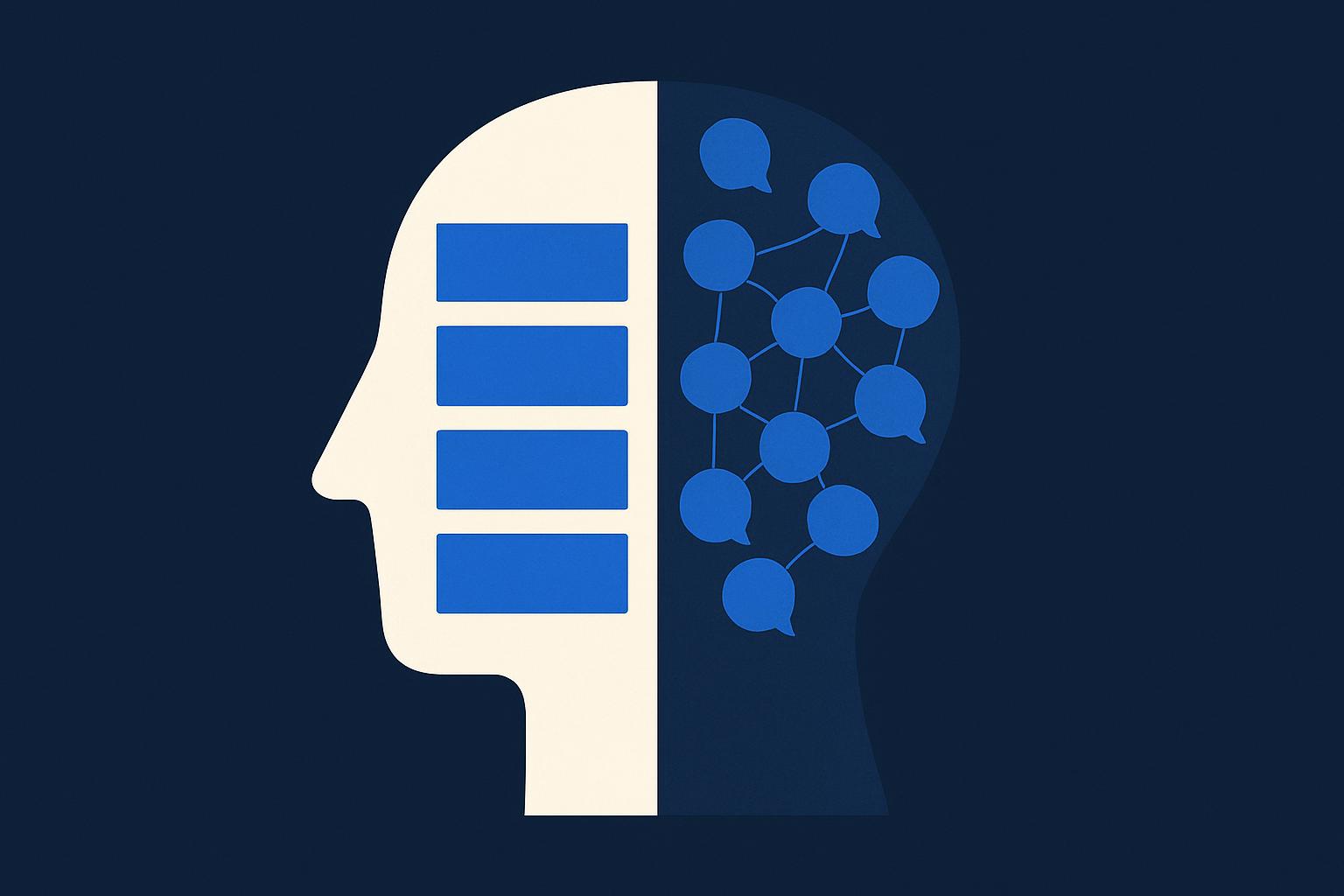
Gemini does not have one citation behavior. It has two. When you ask it an informational question — "what is generative engine optimization," "how does query fan-out work" — it behaves like a librarian: it rewards clear, well-structured, authoritative pages, and it will happily cite your own site. When you ask it a recommendation question — "best project management tool for a 50-person engineering team" — it behaves like a skeptic: it discounts your product page on principle and looks for third parties to vouch for you. Same model, same index, two completely different evaluation modes.
Most founders optimize for one mode and assume it covers the other. It doesn't. The page that wins "what is X" almost never wins "best X," because the two queries don't even draw from the same source pool. Understanding this split — and building for both halves of it — is the difference between being the encyclopedia entry and being the recommendation.
The trigger gap: Gemini surfaces for knowledge, not for buying
The split starts before a single source is selected. Google decides whether to render an AI Overview at all based on intent, and the disparity is enormous. In an Ahrefs study of 146 million SERPs, <a href="https://corymaki.com/how-google-ai-overviews-choose-citations-query-fan-out/">AI Overviews overwhelmingly favored informational queries</a> — 99.9% of AIO-triggering keywords fell into the "Know" category, while Shopping triggered an overview only 3.2% of the time and transactional intent barely registered.
A Northwestern Medill Spiegel study of 160 queries found the same shape at smaller scale: AI Overviews fired on 98% of informational queries versus 40% commercial, 35% navigational, and 0% transactional. Google's read is commercial: it keeps AI summaries on knowledge queries and preserves traditional, ad-friendly blue links for high-intent buying searches.
That gap is closing, but slowly and unevenly. Semrush's 10-million-keyword study found informational queries fell from 91.3% of all AIO triggers in January 2025 to 57.1% by October, as commercial and transactional overviews rose. Navigational triggers jumped from 0.74% to 10.33% in the same window. The point for GEO is that informational visibility and recommendation visibility are not the same battle — and right now the informational battlefield is far larger.
Informational queries: the only disqualifier is content quality
On informational queries, Gemini's filter is essentially meritocratic. It asks one question: does this page answer completely and credibly? The source can be your blog, a Wikipedia article, an academic paper, or a practitioner's tutorial — the engine doesn't care who owns it as long as the passage stands alone and clears its authority bar.
This is where Gemini's architecture matters. Gemini is wired into Google's classical search index and Knowledge Graph rather than a separate retrieval layer, which means strong technical SEO is the on-ramp to citation, not an afterthought. Independent reverse-engineering of AIO source selection describes a pipeline that retrieves 200–500 candidate documents per query, then re-ranks on passage-level extractability, E-E-A-T, and freshness — with E-E-A-T functioning as a binary pass/fail gate. The decisive factors cited include self-contained answer units of roughly 134–167 words and entity density around 15+ Knowledge Graph entities per 1,000 words.
Two practical consequences follow. First, ranking is necessary but no longer sufficient: only 38% of AIO-cited pages still rank in the organic top 10, down from 76% a year earlier. Second, entity recognition is leverage — brands with a strong Knowledge Graph presence (Wikipedia entry, Knowledge Panel, structured entity data) are over-represented in Gemini's outputs. If Gemini doesn't recognize you as an entity, you're invisible on the queries you should own. This is exactly why I tell founders to start with a Knowledge Panel check and build the entity layer with schema before chasing citations. Informational queries are the one mode where you can win with your own content — so make that content genuinely citable.
Recommendation queries: the conflict-of-interest filter kicks in
The moment a query becomes evaluative — "best," "top," "which tool should I use" — Gemini applies a conflict-of-interest filter. Your own product page is no longer a credible source for whether your product is the best, because you obviously benefit from that answer. So the engine preferentially cites third-party comparisons, editorial reviews, and community validation instead.
This is why community content has eaten AI search. Reddit was the single most-cited source across ChatGPT, Google AI Mode, Gemini, Perplexity, and AI Overviews in Semrush's analysis, with a June 2025 study of 150,000+ citations finding Reddit appeared in 40.1% of cases — ahead of Wikipedia at 26.3% and YouTube at 23%. Reddit's AIO citations surged 450% between March and June 2025, helped by Google's reported $60M annual licensing deal. SE Ranking found domains with millions of brand mentions on Reddit and Quora have roughly four times higher odds of being cited. In May 2026, Google made the split explicit by surfacing Reddit and forum quotes as "Community Perspectives," targeting exactly the queries buyers run before contacting sales: product recommendations, troubleshooting, and vendor comparisons. I've written separately on why Reddit dominates AI citations.
Review platforms are the other half of the recommendation pool. Yelp and G2 appeared frequently in recommendation queries, and a Yext study of 6.8 million citations found 86% came from brand-managed sources — websites, directory listings, and review profiles. The takeaway: sustained, current third-party validation (G2, Trustpilot, Capterra with reviews inside the past 12 months and a score above category average) is what feeds the recommendation citation, not your homepage.
What the split means for GEO strategy
Treat informational and recommendation queries as two distinct campaigns with two distinct asset libraries. This is the core of the ARC Method — Audit, Reddit and Reputation, Citability — and the split is exactly why "Reddit and Reputation" sits between the other two.
Own informational queries with your own content
This is the half you fully control. Publish entity-rich, passage-structured explainers, definitions, and how-to guides where each H2 answers one sub-query in a self-contained block. Earn the Knowledge Graph presence that makes Gemini recognize you. Keep the pages fresh — content updated within 30 days earns meaningfully more citations across platforms. If Gemini can't crawl or recognize you here, nothing else matters; that's the "why ChatGPT can't see your site" problem in Google's clothing.
Earn recommendation queries off-site
You cannot self-publish your way into "best X." You need authentic presence in Reddit threads in your category, a current and competitive review profile, and inclusion in the third-party comparison content Gemini trusts. This is reputation work, not content work — and when AI gets your positioning wrong here, it's an AI reputation management problem that no amount of blogging fixes.
One caution: the recommendation pool is volatile. Citation share for community sources can shift in weeks, not years — one tracker documented ChatGPT's Reddit share collapsing from roughly 60% to 10% in six weeks after a single parameter change. Don't build your entire recommendation strategy on one channel. Make sure your facts are consistent everywhere so that whichever third party Gemini happens to trust this quarter describes you correctly.
Gemini's split brain isn't a bug — it's the engine doing its job. Knowledge queries reward the best page. Buying queries reward the most-trusted reputation. If you only build for one, you'll win exactly half the queries that matter. The 90-day GEO roadmap sequences both halves so you're not choosing between them.
Frequently asked questions
Does Gemini really treat informational and recommendation queries differently?
Yes. On informational queries ("what is X," "how does X work"), Gemini evaluates sources primarily on content quality, extractability, and authority, and will cite your own pages. On recommendation queries ("best X for Y"), it applies a conflict-of-interest filter that discounts your product page and preferentially cites third-party reviews, comparisons, and community validation like Reddit.
Why won't Gemini cite my own site for 'best' queries?
Because your site has obvious commercial interest in recommending your own product, so it isn't treated as a credible source for an evaluative claim. AI engines route recommendation citations to third parties — Reddit was the most-cited source across major AI engines, and review platforms like G2 and Yelp appear frequently in recommendation answers.
Which query type triggers AI Overviews more often?
Informational by a wide margin. An Ahrefs study of 146 million SERPs found 99.9% of AIO-triggering keywords were informational, and a Northwestern Medill study found AI Overviews fired on 98% of informational queries versus 0% transactional. The commercial share is rising over time but remains far smaller.
How do I win informational queries in Gemini?
Publish entity-rich, well-structured pages where each section answers one sub-query in a self-contained passage of roughly 134–167 words, build a strong Knowledge Graph presence (Wikipedia entry, Knowledge Panel, schema), keep content fresh, and ensure Google can crawl and rank you — Gemini grounds in Google's index, so strong technical SEO is the citation on-ramp.
How do I win recommendation queries if I can't use my own content?
Earn off-site validation: authentic participation in Reddit threads in your category, a current and competitive review profile on G2, Trustpilot, or Capterra, and inclusion in trusted third-party comparison content. Because community citation share shifts quickly, diversify across channels and keep your facts consistent everywhere so whichever source Gemini trusts describes you accurately.
References
- Ahrefs — What Triggers AI Overviews? 86 Factors and 146 Million SERPs Analyzed
- Medill Spiegel Research Center — Google AI Overviews Decoded
- Semrush — AI Overviews Study: What 2025 SEO Data Tells Us
- Search Engine Land — AI search engines cite Reddit, YouTube, and LinkedIn most: Study
- ZipTie.dev — Google AI Overviews Source Selection: Reverse-Engineering How AIO Picks Sources
- Stridec — How Does Gemini Select Citations? Source-Selection Mechanics
- GEO AIO Marketing — How Generative Engines Handle Product Recommendations Versus Informational Queries
- TechCrunch — Google updates AI search to include quotes from Reddit and other sources

Cory Maki is an AI search strategist based in Taichung, Taiwan, specializing in GEO, AI reputation management, and AI branding for SaaS founders. Author of Reddit, AI Overviews & GEO and creator of the ARC Method. Read more →