Building Your Entity: Schema and the Knowledge Graph for SaaS
Most SaaS founders think of search visibility as a ranking problem. It is increasingly an identity problem. Before an AI system decides whether to cite your brand, it first has to resolve who you are — to match your domain against a known entity in its knowledge base. Get that resolution wrong, or fail it entirely, and you are excluded from the answer before a single passage is scored.
This is the part of GEO that gets the least attention and carries the most leverage. In one May 2026 citation study of 153,425 citations, 76.95% of cited URLs were outside the organic top-10 — strong evidence that entity recognition now outweighs ranking position. If you want to be the brand AI mentions, you have to first become a brand AI can identify. That is what entity building is, and schema markup plus the Knowledge Graph is how you do it.
An entity is a thing, not a string — and that distinction is now the whole game
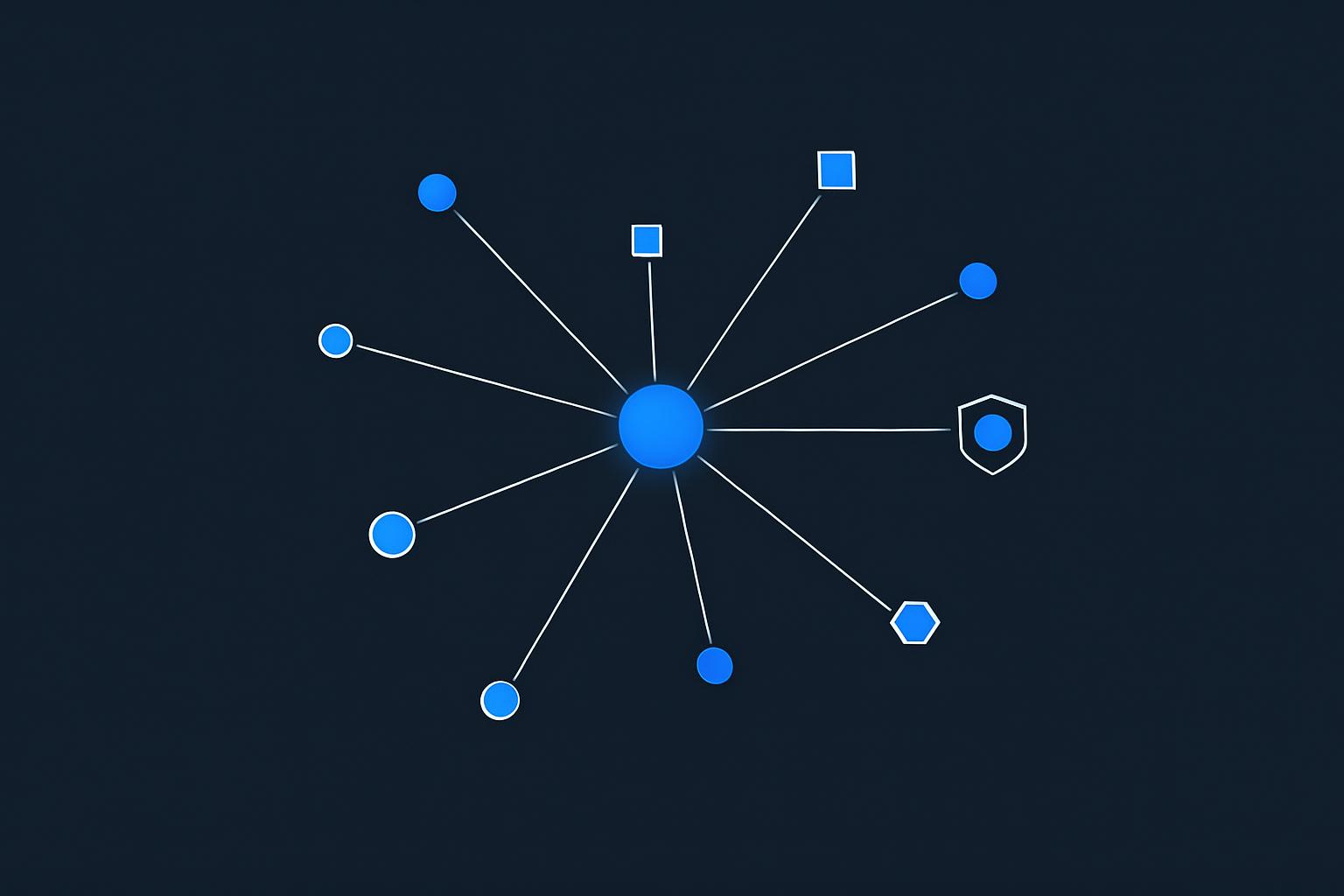
Google stopped being a keyword-matching engine and became a meaning-matching one. The Knowledge Graph is the database that made the shift possible: a structured network of real-world entities — people, places, organizations, concepts — connected by defined relationships. It currently holds, by Ahrefs' count, over 1.6 trillion facts about 54 billion entities.
The practical difference is simple. Keyword SEO matches strings of characters; entity SEO targets the underlying concept those strings represent. "Jaguar" the car brand and "jaguar" the animal are the same string but different entities. For a SaaS company with a generic or ambiguous name — and many have one — this is not academic. If Google cannot cleanly distinguish your product from a similarly named competitor, neither can ChatGPT, Perplexity, or AI Overviews. The systems built on top of the Knowledge Graph reason in entities, not strings.
This is also why I treat entity work as foundational rather than optional. As I argue in the GEO-is-just-SEO debate, much of GEO is older technical SEO finally mattering more — and entity clarity is the clearest example.
Quality now beats quantity in the Knowledge Graph — Google proved it in June 2025
If you needed evidence that Google is tightening its definition of a trustworthy entity, it arrived last summer. In June 2025, Google ran what the industry called a "Clarity Cleanup," removing roughly 3 billion entities in a single week — ambiguous or outdated records pruned to power its AI features more reliably.
The takeaway for SaaS founders is direct: the consistency and quality of your entity signals matter more than ever. A leaner Knowledge Graph means Google is less willing to guess. Either your brand resolves cleanly to a confident entity node, or it does not get represented at all. That raises the stakes on the unglamorous work of making your identity machine-readable and consistent everywhere it appears.
Organization schema is how you declare your identity — but it confirms, it doesn't create
Organization schema is the foundational markup for any SaaS brand. It declares your company as a discrete entity with machine-readable attributes — name, URL, logo, description — rather than forcing Google to infer your identity from scattered mentions across the web.
Be clear-eyed about what it does, though. Organization schema confirms an entity Google already recognizes; it does not create one. Markup is necessary but not sufficient. Without external endorsement — Wikidata, press coverage, authoritative citations — your entity remains a self-claim, and Google weights independent sources far more heavily than self-declarations.
A few implementation rules that separate clean entity graphs from fragmented ones:
Use a stable @id and define your Organization once
Define the full Organization block once, on your homepage, and reference it everywhere else via @id. When each page declares a new Organization without a shared @id, you get schema fragmentation and no consolidation. Multiple full definitions drift apart over time — the logo updates in one place, the description in another — and eventually Google has parsed three different versions of you.
Keep name, URL, and description identical everywhere
Three properties must match across your schema, your Wikidata item, your LinkedIn page, and your Crunchbase profile: name, canonical URL, and description. "Acme Corp" in schema, "Acme Corp." on LinkedIn, and "ACME" on Wikidata read as three different entity nodes. Inconsistency in those three blocks the merge.
sameAs is the connective tissue — Wikidata is the highest-leverage link
If Organization schema declares your identity, the sameAs property proves it. sameAs is an array of URLs pointing to authoritative external profiles that describe the same entity, and Google and AI systems use these links to merge information from multiple sources into a single entity record. It is the merge instruction — it tells the engine which external profiles to fold into your entity node.
Not all sameAs targets are equal. Wikidata is the single highest-impact target because it is a direct data feed into Google's Knowledge Graph; a Wikidata entry with an official-website property set and a consistent label is the fastest path to a confirmed entity node. A sensible priority order for SaaS brands: Wikidata, Wikipedia (if you qualify), LinkedIn, Crunchbase, and GitHub.
Two cautions that show up in nearly every entity audit:
- A broken sameAs link is worse than no link. A link to a deleted or redirected profile signals an entity that was once resolvable and no longer is. Audit your sameAs array quarterly and click every URL.
- Don't expect a Knowledge Panel as proof. A panel is a visible byproduct of recognition, not the goal. Many brands achieve full entity recognition — being cited in AI Overviews — without ever earning a panel. The strategic objective is Knowledge Graph inclusion and the trust that comes with it.
While you are in the markup, add knowsAbout to declare the topics and problems your product genuinely addresses. It creates a topical authority signal that AI source-selection uses when choosing sources for a query category. Connect your founder and authors with Person schema, linked back to the Organization via worksFor, so both layers of your entity graph cross-reference each other.
What schema can and cannot do for AI citations — read the evidence honestly
Here is where I part ways with the hype. The honest summary is that schema removes ambiguity; it does not manufacture trust. Structured data does not establish that you are trustworthy or convince an AI that your content is accurate — it takes content a machine would otherwise have to interpret and labels it explicitly, so the machine does not have to guess.
The research is genuinely mixed, and you should know that. A December 2024 Search/Atlas study found no correlation between schema coverage and citation rates, and some testing suggests LLMs may strip markup during tokenization. On the other side, SE Ranking found that 65% of pages cited by Google AI Mode and 71% cited by ChatGPT include structured data, and a controlled experiment showed a 19.72% lift in AI Overview visibility over two months from applying entity linking to structured data.
The reconciliation is straightforward. Schema is confirmed to be used by Bing Copilot and Google AI Overviews; for other platforms, implementation is unverified. So position schema for what it reliably delivers: cleaner entity resolution, better extraction where it is used, and a low-cost foundation with upside as platforms evolve. As I put it in my guide to making content citable: authority makes you worth citing, schema makes you easy to cite. You need both, and the second is the part you fully control.
Note one recent change so you don't waste effort: Google deprecated FAQ schema in January 2026 and HowTo rich results in February 2026. They no longer earn rich results — though clean, machine-readable Q&A content remains worth structuring for extraction.
A practical sequence for SaaS founders
Entity building is not a one-afternoon task, but it is a finite one. The sequence I run with clients maps directly onto the ARC Method's audit phase:
- Check whether Google already recognizes you. Use the Knowledge Graph API or a free checker to see your current entity type, attributes, and whether anything is wrong. This connects to broader AI reputation work — if AI describes you incorrectly, a confused entity is often the root cause.
- Implement Organization schema with a stable @id, defined once, JSON-LD in the head, validated with the Schema Markup Validator and Rich Results Test.
- Build a complete, consistent sameAs array, prioritizing Wikidata. Make name, URL, and description identical across every profile.
- Create or correct your Wikidata entry, supported by references — commercial registry, press, trade coverage — or it will be deleted.
- Test, then re-test. Run direct brand prompts in ChatGPT and Perplexity at 30, 60, and 90 days. Allow four to eight weeks for crawlers to re-index and changes to surface in generated answers.
Fold this work into a structured plan rather than treating it as a side project — it fits cleanly into the 90-day GEO roadmap. And if AI still can't see your site at all after this, the problem is upstream of entities, which I cover in why ChatGPT can't see your website.
The brands that win AI search in 2026 will not be the ones with the cleverest content. They will be the ones AI can confidently identify, resolve, and trust. Entity building is how you earn that confidence — and it is almost entirely within your control.
Frequently asked questions
Will adding Organization schema get my SaaS a Google Knowledge Panel?
Not on its own. Organization schema confirms an entity Google already recognizes — it doesn't create one. Panels are generated from sources like Wikipedia, Wikidata, and trusted third-party sites, and require consistent branding plus external endorsement. Importantly, a panel isn't the goal: many brands achieve full entity recognition and AI citations without ever earning one. The objective is Knowledge Graph inclusion, not the visible box.
Does schema markup actually increase AI citations?
The evidence is mixed and you should treat it honestly. A December 2024 Search/Atlas study found no correlation between schema coverage and citation rates, while SE Ranking found 65% of pages cited by Google AI Mode and 71% cited by ChatGPT include structured data. Schema is confirmed to be used by Bing Copilot and Google AI Overviews; for other platforms it's unverified. The reliable framing: authority makes you worth citing, schema makes you easy to cite. It removes ambiguity rather than manufacturing trust.
What is the single most valuable sameAs link for a SaaS brand?
Wikidata. It's a direct data feed into Google's Knowledge Graph, so a Wikidata entry with your official-website property set and a consistent label is the fastest path to a confirmed entity node. A good priority order after that is Wikipedia (if you qualify), LinkedIn, Crunchbase, and GitHub. Just make sure every linked profile uses an identical name, URL, and description, or the merge fails.
Should I still use FAQ and HowTo schema in 2026?
Google deprecated FAQ schema rich results in January 2026 and HowTo in February 2026, so they no longer earn rich results. That said, structuring genuine question-and-answer content remains useful for clean extraction by AI systems. Prioritize entity-level schema — Organization, Person, sameAs, and knowsAbout — which carries the most weight for entity recognition and AI source selection.
How long before entity work shows up in AI answers?
Plan for four to eight weeks for crawlers to re-index your pages and for changes to reflect in AI-generated responses. Validate your markup immediately with the Schema Markup Validator and Rich Results Test, then run direct brand prompts in ChatGPT and Perplexity at 30, 60, and 90 days to track entity recognition and citation accuracy over time.
References
- Ahrefs — Google's Knowledge Graph Explained: How It Influences SEO & AI Search
- Search Engine Land — How schema markup fits into AI search — without the hype
- OrganiKPI — Schema sameAs Property: How Entity Disambiguation Drives AI Citations
- Squin.org — Organization Schema & ContactPoint: JSON-LD @id Guide
- SEO-Kreativ — Semantic Search & Knowledge Graph: How Google Understands Meaning
- Alhena — Schema Markup for AI Search: 65% of AI-Cited Pages Use It
- The HOTH — Schema Markup and AI Citations: Which Tags Actually Affect Whether You Get Pulled
- GWContent — Entity SEO: How Search Engines Use Knowledge Graphs

Cory Maki is an AI search strategist based in Taichung, Taiwan, specializing in GEO, AI reputation management, and AI branding for SaaS founders. Author of Reddit, AI Overviews & GEO and creator of the ARC Method. Read more →